
 Laetitia DJOUEPOU
If you are learning French, you probably spend a lot of time learning vocabulary, grammar and useful expressions. But there is another important part of becoming comfortable in French: understanding how French people use images and metaphors in everyday conversation.
French speakers often use expressions that, taken literally, make very little sense. Someone might tell you that they are dans le brouillard (“in the fog”), that they have un poil dans la main (“a hair in their hand”), or that something coûte les yeux de la tête (“costs the eyes of the head”).
Of course, they are not necessarily talking about fog, hair or someone’s eyes!
These expressions are metaphorical. They allow speakers to communicate an idea by creating a mental picture. And learning them is one of the best ways to move from textbook French to real-life French.
What is a metaphor?
A metaphor is a way of describing one thing by comparing it, directly or indirectly, to something else.
For example, in English we might say:
“I’m drowning in work.”
We don’t mean that we are literally underwater. The image of drowning communicates that we have far too much work.
French works in exactly the same way.
A French speaker might say:
Je suis débordé(e).
Literally, débordé suggests something overflowing. The idea is that you have so much to do that your tasks are spilling over like water from a container.
Metaphors make language more visual, emotional and expressive.
Why are metaphors so important in spoken French?
1. They make you sound more natural
A learner can often communicate perfectly well using direct vocabulary. However, native speakers frequently use expressions that are much more colourful.
For example:
Je suis très fatigué.
= I am very tired.
This is perfectly correct.
But in everyday conversation, you might hear:
Je suis crevé(e).
= I’m exhausted.
Or:
Je suis sur les rotules !
Literally: “I’m on my kneecaps!”
The expression être sur les rotules creates a funny image of someone who is so exhausted that they can barely stand.
You don’t need to use metaphors in every sentence. But recognising them helps you understand the way French is actually spoken.
2. They help you understand conversations faster
One of the biggest difficulties for French learners is that native speakers don’t always say exactly what they mean literally.
Imagine someone says:
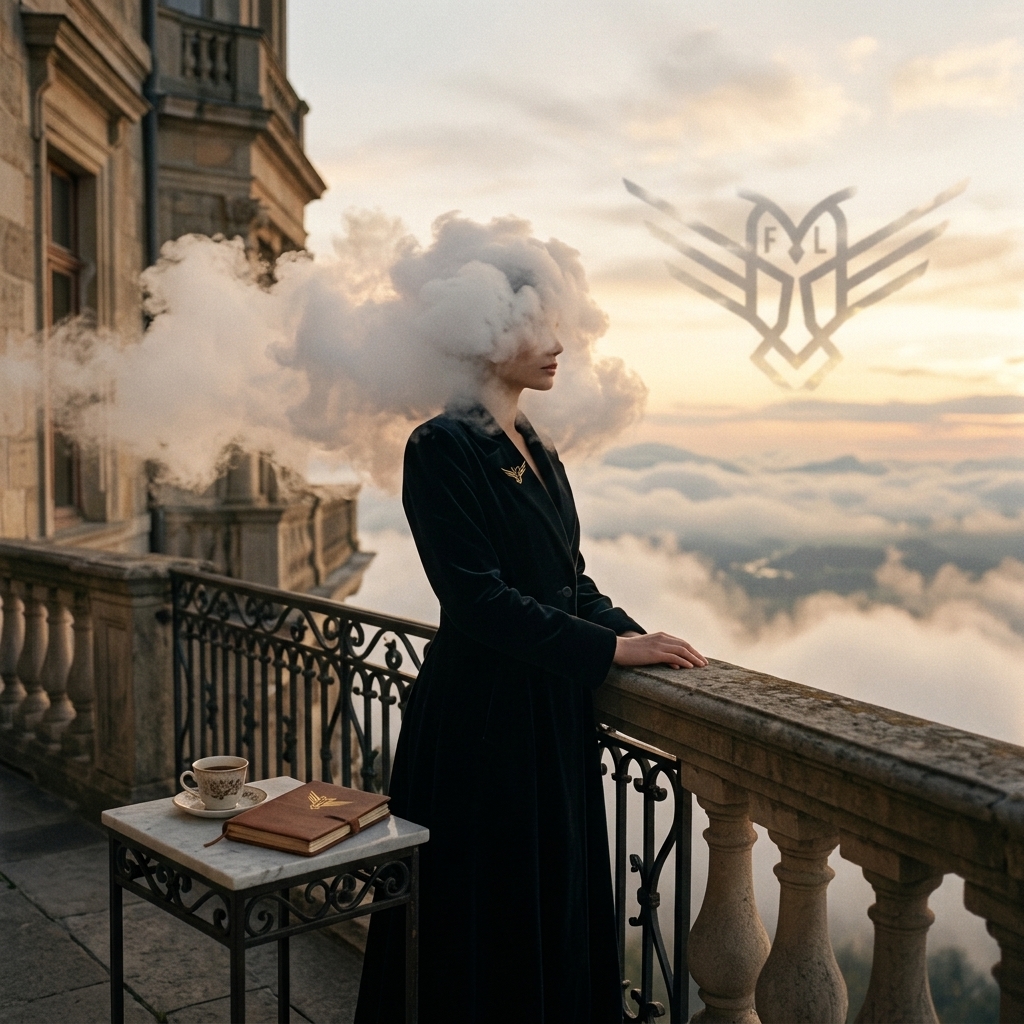
J’ai la tête dans les nuages aujourd’hui.
If you translate every word individually, you get:
“I have my head in the clouds today.”
But the speaker means that they are absent-minded, distracted or daydreaming.
Similarly:
Il a le cœur sur la main.
Literally:
“He has his heart on his hand.”
The meaning is that he is very generous and willing to help others.
If you understand the image rather than translating each word, the expression becomes much easier to remember.
3. Metaphors make vocabulary easier to remember
Interestingly, metaphors can actually help you learn French vocabulary.
Imagine learning:
avoir la tête dans les nuages
= to be absent-minded / to have your head in the clouds
You are not simply memorising three or four unrelated words. You are remembering a picture.
Your brain can imagine someone walking around with their head literally among the clouds.
That image gives the expression a context and makes it much easier to retrieve later.
This is particularly useful for learners who want to improve their spoken French, because you need to recall expressions quickly when you are having a conversation.
Some useful everyday French metaphors
Here are some expressions you are likely to encounter in everyday French.
🧠 Avoir la tête dans les nuages
Literal meaning: To have your head in the clouds.
Real meaning: To be distracted, dreamy or absent-minded.
Aujourd’hui, j’ai complètement la tête dans les nuages.
“I’m completely distracted today.”
💰 Coûter les yeux de la tête
Literal meaning: To cost the eyes of the head.
Real meaning: To be extremely expensive.
Cette voiture coûte les yeux de la tête !
“That car costs a fortune!”
This is a great example of why translating French word-for-word can be confusing. The image is exaggerated, which makes the expression memorable.
❤️ Avoir le cœur sur la main
Literal meaning: To have your heart on your hand.
Real meaning: To be generous and kind.
Elle a vraiment le cœur sur la main.
“She is incredibly generous.”
The image suggests that your heart is openly available to other people.
🌧️ Être dans le brouillard
Literal meaning: To be in the fog.
Real meaning: To be confused, tired or unable to think clearly.
Ce matin, je suis complètement dans le brouillard.
“This morning, I can’t think straight.”
You might hear this after a bad night’s sleep, for example.
🦶 Être sur les rotules
Literal meaning: To be on your kneecaps.
Real meaning: To be completely exhausted.
Après cette journée, je suis sur les rotules !
“After that day, I’m exhausted!”
It is much more expressive than simply saying je suis fatigué(e).
✋ Avoir un poil dans la main
Literal meaning: To have a hair in your hand.
Real meaning: To be very lazy.
Il a vraiment un poil dans la main !
“He’s really lazy!”
The humorous image is of someone who is so unwilling to work that a hair can grow in their hand because they never use it.
🔥 Mettre de l’huile sur le feu
Literal meaning: To put oil on the fire.
Real meaning: To make a difficult situation worse, particularly an argument.
Ne mets pas de l’huile sur le feu !
“Don’t make things worse!”
This metaphor is actually very easy for English speakers because English has the same expression: to add fuel to the fire.
🍰 Avoir du pain sur la planche
Literal meaning: To have bread on the board.
Real meaning: To have a lot of work to do.
J’ai du pain sur la planche cette semaine.
“I’ve got a lot of work to do this week.”
The expression creates the image of a baker with a large amount of bread waiting to be prepared.
Metaphors are more than vocabulary
The important thing to remember is that learning metaphors isn’t simply about collecting a list of strange French expressions.
They also teach you how French speakers think about and describe everyday situations.
French, like English, uses images connected to the body, food, weather, animals, work and everyday objects.
For example:
- avoir la tête dans les nuages → the body + weather
- avoir le cœur sur la main → the body
- coûter les yeux de la tête → the body
- mettre de l’huile sur le feu → fire
- avoir du pain sur la planche → food/work
- être dans le brouillard → weather
These categories can make learning much easier.
Instead of memorising 20 completely unrelated expressions, you can learn them in families of images.
Should you use metaphors yourself?
Yes—but gradually.
As a learner, you don’t need to force yourself to use an idiomatic expression every time you speak French. It is better to understand an expression first and then start using it when you feel comfortable.
A good strategy is to learn one or two expressions at a time and deliberately use them during the week.
For example, if you learn:
J’ai du pain sur la planche.
Try using it when talking about work, studying or household tasks.
After using it several times, it will start to feel like a natural part of your French rather than a phrase you have memorised from a textbook.
From “correct French” to “natural French”
Learning grammar allows you to build correct sentences.
Learning vocabulary allows you to express your ideas.
But learning everyday metaphors and idiomatic expressions helps you understand how French is really spoken.
You don’t need hundreds of expressions to sound natural. A small collection of well-understood expressions can make a surprisingly big difference.
So, the next time you hear a French speaker say something that sounds strange when translated literally, don’t panic.
Ask yourself:
“Is this actually a metaphor?”
There may be a completely different meaning hiding behind the words.
And that is one of the fascinating things about learning a language: sometimes, understanding the picture is more important than understanding the individual words.